
- What Factors Influence Video Editing Pricing for Small Businesses?
- How Do Different Video Editing Pricing Models Work?
- What Are Typical Video Editing Costs for Common Small Business Videos?
- How Can Small Businesses Optimize Their Video Editing Budget?
- Why Invest in Professional Video Editing for Your Small Business?
Published May 25, 2026 · 15 min read
Navigating the costs of creating compelling visual content can be a challenge, especially when you’re a small business owner. This comprehensive video editing pricing guide for small businesses is designed to demystify the investment required for professional video services. We’ll explore the factors that influence pricing, different payment models, and how you can maximize your budget to achieve stunning results that truly resonate with your audience and elevate your brand.
At Motion Edges, we understand that every dollar counts for small businesses. That’s why we’re committed to providing transparent insights into video editing costs, helping you make informed decisions that align with your marketing goals and financial planning. Let’s dive in and uncover how you can leverage expert video editing without breaking the bank.
💡 Investing in high-quality video editing isn’t just an expense, it’s a strategic investment that pays dividends in brand recognition, customer engagement, and ultimately, sales for your small business.
What Factors Influence Video Editing Pricing for Small Businesses?
Video editing pricing for small businesses is primarily influenced by video length, project complexity (e.g., motion graphics, special effects), raw footage quality, revision rounds, and editor experience. The type of video, like a short social media clip versus a detailed corporate explainer, also significantly impacts costs due to varying post-production demands.
Understanding these variables is the first step in budgeting effectively for your video marketing strategy. When you approach a professional video editing agency like Motion Edges, we consider several key elements to provide you with an accurate quote. Here’s a closer look at what drives the cost:
Video Length and Project Scope
Naturally, a longer final video will require more editing time, directly impacting the cost. However, it’s not just about the final duration. The overall scope of the project, including the amount of raw footage to sift through, the number of individual clips, and the desired pacing, all play a role. A 60-second social media ad might seem short, but if it requires intricate transitions and precise timing, it could take more effort than a two-minute interview edit.
Complexity of Editing and Post-Production
This is arguably the most significant factor. Basic cuts and transitions are less expensive than advanced techniques. Consider:
- Motion Graphics & Animation: Custom animated titles, lower thirds, infographics, or full animated sequences add considerable time and specialized skill.
- Visual Effects (VFX): Green screen keying, object removal, compositing, or other special effects are highly complex.
- Color Grading: Professional color correction and grading to achieve a specific look and feel.
- Audio Editing: Noise reduction, sound mixing, music licensing, and voiceover synchronization.
- Advanced Storytelling: Crafting a narrative from disparate clips, requiring creative input and iterative refinement.
✅ To manage complexity, provide a clear brief with reference videos. The more detailed your vision, the less guesswork for the editor, which can save time and money.
Quality of Raw Footage and Assets
The better your raw footage, the smoother and faster the editing process. Poorly shot, shaky, or low-resolution footage requires more time to fix or may limit creative options. Similarly, providing well-organized assets (logos, brand guidelines, music tracks) streamlines the workflow. If the editor needs to source stock footage, music, or additional graphics, these can add to the overall video editing pricing.
Number of Revision Rounds
Most professional video editing services include a set number of revision rounds in their quotes. Exceeding these rounds typically incurs additional charges. This is why clear communication and feedback are crucial. Our team at Motion Edges works closely with you to minimize revisions and ensure your vision is captured efficiently.
Editor Experience and Agency Overhead
Highly experienced editors and established agencies often command higher rates due to their proven track record, specialized skills, and robust infrastructure. While a freelance editor might offer a lower hourly rate, an agency often provides a dedicated project manager, quality control, and a broader range of expertise, ensuring a more consistent and professional output. When considering our professional editing services, you’re investing in a team with years of industry experience.
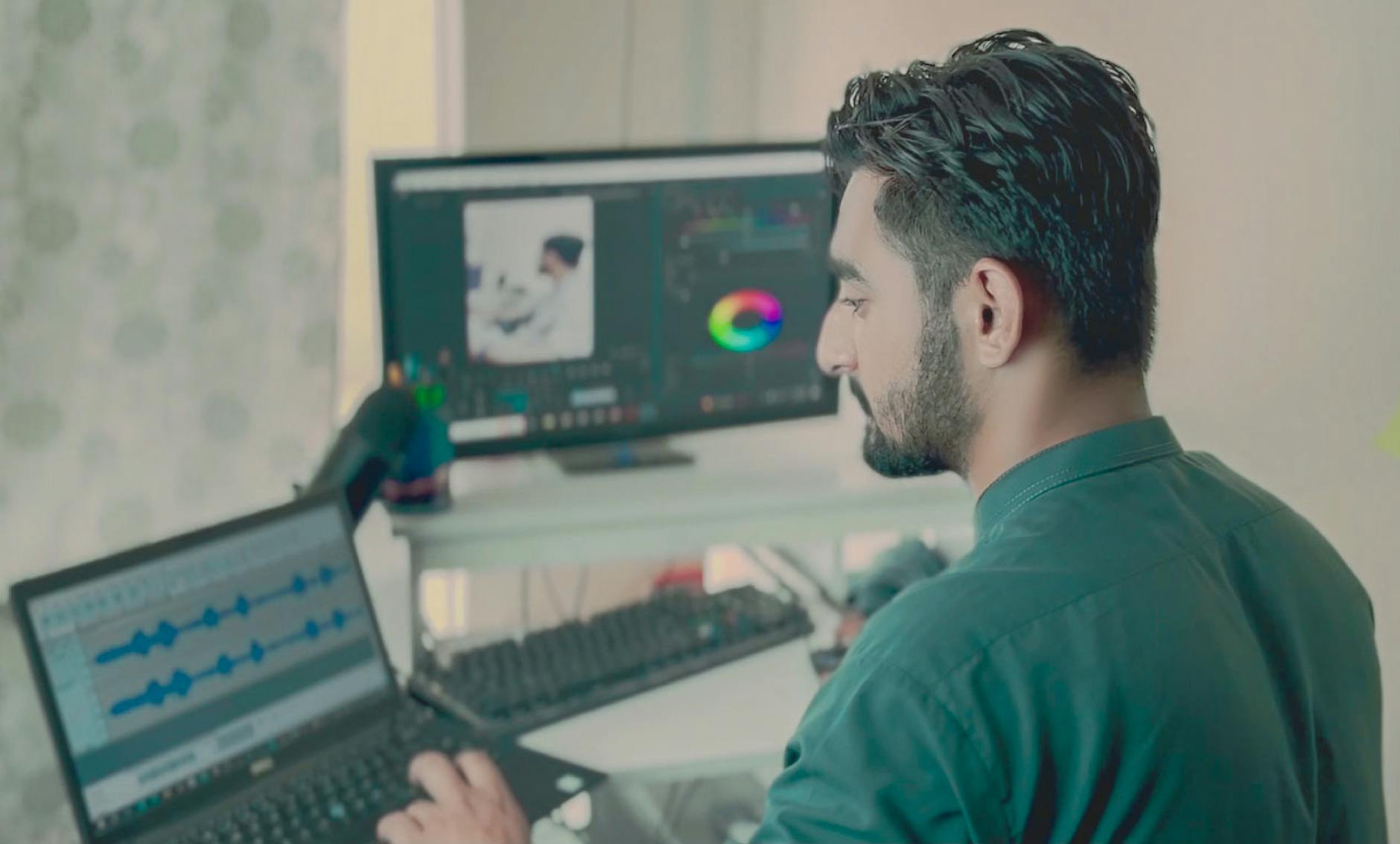
A professional editor’s expertise significantly impacts the quality and efficiency of your video project.
How Do Different Video Editing Pricing Models Work?
Video editing pricing models commonly include hourly rates, project-based fees, and retainer agreements. Hourly rates charge for time spent, project-based fees offer a fixed cost for a defined scope, and retainers provide ongoing services for a recurring fee, each catering to different small business needs and budget predictability.
Choosing the right pricing model is essential for effective budget management and ensuring you get the most value from your investment in video content. Let’s break down the common approaches:
Hourly Rates
This model involves paying an editor or agency for every hour they spend on your project. Hourly rates typically range from $50 to $150 per hour, depending on the editor’s experience, location, and the complexity of the work. For highly specialized tasks like motion graphics or complex VFX, rates can go even higher.
Pros:
- Flexibility: Good for small, unpredictable tasks or projects with evolving scopes.
- Transparency: You pay for the exact time spent.
Cons:
- Unpredictable Costs: It can be hard to estimate the final cost, especially for complex projects.
- Efficiency Concerns: Less efficient editors might rack up more hours.
⚠️ While hourly rates seem flexible, they can quickly escalate if the project scope isn’t clearly defined or if unexpected issues arise. Always get an estimated hour range upfront.
Project-Based Pricing
Project-based pricing, also known as fixed-fee pricing, involves a single, agreed-upon price for the entire project, based on a clearly defined scope of work. This is often preferred for specific video types like a product demo, a social media ad, or an event highlight reel.
Pros:
- Budget Predictability: You know the exact cost upfront, simplifying financial planning.
- Focus on Deliverables: The editor is motivated to complete the project efficiently within the agreed scope.
Cons:
- Less Flexibility: Changes to the scope after the agreement can lead to additional fees.
- Requires Clear Briefing: A detailed project brief is crucial to avoid misunderstandings.
Many of our clients appreciate our transparent pricing for project-based work, as it removes guesswork and allows for clear budgeting. We work with you to define the scope and provide a comprehensive quote.
Retainer Agreements (Monthly or Quarterly)
A retainer agreement means you pay a fixed recurring fee for a set amount of editing services over a specified period, typically monthly or quarterly. This model is ideal for small businesses that have ongoing video content needs, such as regular social media updates, YouTube series, or continuous marketing campaigns.
Pros:
- Consistent Output: Ensures a steady stream of video content.
- Cost Savings: Often more cost-effective than paying for individual projects over time.
- Dedicated Resource: You have a dedicated editing team familiar with your brand.
Cons:
- Commitment: Requires a longer-term commitment.
- Less Flexibility: If your video needs fluctuate significantly, you might pay for unused capacity or incur extra charges for exceeding limits.
| Pricing Model | Best For | Key Benefit | Potential Drawback |
|---|---|---|---|
| Hourly Rate | Small, unpredictable tasks; evolving projects | Flexibility | Unpredictable final cost |
| Project-Based Fee | Specific, defined video projects (e.g., product launch video) | Budget predictability | Less flexibility for scope changes |
| Retainer Agreement | Ongoing content needs (e.g., weekly social media videos) | Consistent output, potential savings | Long-term commitment required |
What Are Typical Video Editing Costs for Common Small Business Videos?
Typical video editing costs for small businesses vary widely. A basic social media video might range from $200-$800, while a longer explainer video could be $1,500-$5,000, and a comprehensive brand anthem video could exceed $7,000. These figures depend heavily on editing complexity, included services, and the editor’s expertise.
To give you a clearer picture for this video editing pricing guide for small businesses, here are some average cost ranges for popular types of videos that small businesses often need. Remember, these are estimates, and actual costs can vary based on the factors we discussed earlier.
Social Media Videos (Short-Form)
These are typically 15-60 seconds long, designed for platforms like Instagram Reels, TikTok, or Facebook. They often feature quick cuts, text overlays, and trending music.
- Basic Editing: $200 – $800 per video. This usually includes cutting, simple text, basic color correction, and sound design.
- Advanced Editing: $800 – $2,000+ per video. This might involve custom motion graphics, complex transitions, VFX, or professional voiceovers.
Explainer or Product Demo Videos
These videos, often 1-3 minutes long, simplify complex concepts or showcase product features. They frequently use screen recordings, voiceovers, and animated elements.
- Standard Editing: $1,500 – $3,500 per minute of finished video. This covers robust editing, basic motion graphics, and audio mixing.
- High-End Editing with Animation: $3,500 – $7,000+ per minute. Expect custom character animation, intricate motion graphics, and professional voiceover talent.
Testimonial or Interview Videos
Typically 2-5 minutes, these videos feature customer stories or expert insights. They usually involve multi-camera editing, lower thirds, and B-roll footage.
- Basic Editing: $800 – $2,500 per video. Includes selecting the best takes, adding intro/outro, lower thirds, and basic color correction.
- Polished Production: $2,500 – $5,000+ per video. Involves advanced storytelling, B-roll integration, high-quality motion graphics, and professional sound mixing.
Brand Story or Company Overview Videos
Longer-form videos (3-7 minutes or more) that tell your brand’s story, highlight values, or provide a comprehensive company overview. These often demand a cinematic approach.
- Comprehensive Editing: $2,500 – $7,000+ per project. This is a broad range as these projects are highly customized, often involving significant creative direction, complex narrative structuring, and a high degree of post-production polish.
To see examples of what’s possible within different budget ranges, we invite you to see our portfolio. It showcases the diverse range of projects our team has successfully delivered for businesses just like yours.

High-quality video content is crucial for small businesses to stand out and connect with their audience.
How Can Small Businesses Optimize Their Video Editing Budget?
Small businesses can optimize their video editing budget by preparing high-quality raw footage, clearly defining project scope upfront, limiting revision rounds, and choosing the right pricing model. Reusing existing assets and opting for simpler editing styles can also significantly reduce overall video production costs without sacrificing impact.
Budget constraints are a reality for many small businesses, but they don’t have to hinder your ability to produce great video content. With smart planning and strategic choices, you can get professional results without overspending. Here’s how:
1. Plan Thoroughly Before Filming
- Create a Detailed Script/Outline. A well-defined script or outline ensures you capture all necessary shots and dialogue, reducing wasted footage and editing time.
- Storyboarding. For more complex videos, a simple storyboard can visually guide the shoot, making the editor’s job much easier.
- Gather All Assets. Have your logo, brand colors, fonts, music choices, and any specific graphics ready before editing begins.
2. Shoot High-Quality Footage
The quality of your raw footage is paramount. Even the best editor can’t turn poorly shot video into a masterpiece without significant, costly effort. Ensure your footage is:
- Well-Lit: Avoid dark or overly bright shots.
- Stable: Use tripods or stabilizers to prevent shaky video.
- Clear Audio: Use external microphones when possible to capture crisp sound, free from background noise.
- Proper Resolution: Shoot in the highest resolution suitable for your intended platform (e.g., 1080p or 4K).
3. Be Clear and Concise with Feedback
When it comes to revisions, being precise and consolidating your feedback saves time and money. Instead of multiple small requests, gather all your comments and provide them in one go, clearly referencing time codes. This minimizes back-and-forth and keeps you within your allotted revision rounds.
4. Consider Batching Content
If you have ongoing video needs, consider producing multiple videos at once. For example, shoot several social media clips or interview segments in one session. This allows editors to work more efficiently, often leading to better rates or a more optimized use of a retainer agreement.
5. Leverage Existing Content
Do you have old photos, graphics, or even older video clips that can be repurposed? Reusing existing brand assets can significantly cut down on the need for new footage or extensive graphic design, reducing overall video editing pricing.
💡 Don’t be afraid to discuss your budget constraints upfront with your editing partner. A good agency, like Motion Edges, can often suggest creative solutions or alternative approaches to fit your financial parameters while still delivering impact.
Why Invest in Professional Video Editing for Your Small Business?
Investing in professional video editing for your small business ensures high-quality content that enhances brand credibility, boosts engagement, and drives conversions. Polished videos stand out in a crowded digital landscape, effectively communicate your message, and ultimately offer a strong return on investment by attracting and retaining customers.
While DIY video editing might seem like a cost-saving solution, the long-term benefits of professional services often outweigh the initial expense. Here’s why making that investment is crucial for your small business’s growth:
Enhanced Brand Image and Credibility
In today’s competitive market, the quality of your content directly reflects on your brand. Professionally edited videos convey expertise, attention to detail, and a commitment to quality. Shaky footage, poor audio, or amateurish transitions can detract from your message and erode trust with potential customers. Our team ensures every video polished to perfection, elevating your brand’s perception.
Increased Engagement and Reach
High-quality video is inherently more engaging. According to Insivia, viewers retain 95% of a message when they watch it in a video, compared to 10% when reading it in text. Professional editing optimizes pacing, visual appeal, and sound design to keep viewers hooked, increasing watch time and encouraging shares. This expanded reach is invaluable for small businesses looking to grow their audience.
Clear and Effective Storytelling
A professional editor doesn’t just cut clips; they craft a narrative. They understand how to structure a story, build suspense, and evoke emotion, ensuring your message is not only heard but felt. This expert storytelling helps you connect with your audience on a deeper level, transforming viewers into loyal customers.
Time and Resource Savings
Your time as a small business owner is precious. While you might save money attempting to edit videos yourself, the hours spent learning software, troubleshooting, and endlessly refining can be better invested in core business activities. Outsourcing to a professional team frees you up to focus on what you do best, knowing your video content is in expert hands.
Higher Return on Investment (ROI)
Ultimately, professional video editing for small businesses is about driving results. A polished, engaging video is more likely to generate leads, convert sales, and build customer loyalty. Wyzowl reports that 87% of marketers say video has helped them increase sales. This strong ROI makes the investment in quality editing a financially sound decision for sustainable growth.
Understanding the nuances of a video editing pricing guide for small businesses is paramount to making smart marketing decisions. Investing in professional video editing services, like those offered by Motion Edges, ensures your brand stands out, connects with your audience, and drives measurable results. We’re here to help you navigate these costs and deliver exceptional video content that aligns perfectly with your budget and business goals. Ready to elevate your video strategy? Don’t hesitate to get in touch with our team today and discover how we can transform your vision into compelling video.
What’s the typical turnaround time for professional video editing?
Turnaround time for professional video editing typically ranges from 3 to 7 business days for a standard 1-3 minute video, depending on complexity, revision rounds, and agency workload. More intricate projects with extensive motion graphics or VFX can take longer, often 2-4 weeks. Always clarify the estimated timeline with your editing partner upfront.
Should I hire a freelance editor or an agency for my small business?
Hiring a freelance editor often offers lower rates and direct communication, suitable for simpler, one-off projects. An agency, like Motion Edges, typically provides a broader range of expertise, dedicated project management, consistent quality, and scalability for ongoing or complex projects, making it a better long-term investment for many small businesses.
Are there hidden costs in video editing pricing?
Reputable agencies provide transparent pricing, but potential hidden costs can arise from exceeding agreed-upon revision rounds, requests for additional footage sourcing, unexpected complex VFX, or expedited delivery fees. Always ensure your contract clearly outlines what’s included and any potential extra charges to avoid surprises. Reviewing our transparent pricing page can help you understand common inclusions.
Can I get a custom quote for my specific video project?
Absolutely. Most professional video editing services, including Motion Edges, offer custom quotes based on your unique project requirements. Provide as much detail as possible about your video’s length, desired style, raw footage quality, and specific needs (e.g., motion graphics, voiceover) to receive an accurate and tailored estimate.
Is stock footage or music included in video editing costs?
Whether stock footage or music is included depends on the editor or agency’s policy and the pricing model. Some project-based fees or retainers might include a certain amount of royalty-free assets, while others may charge separately for licensing. Always confirm this detail when discussing your video editing pricing to avoid additional fees.
Ready to Elevate Your Video Content?
Motion Edges delivers professional video editing that drives engagement and growth. Our dedicated editors learn your style and deliver consistently polished content.
Related Services from Motion Edges
- Talking Head Video Editing in New York — clean cuts, captions, and b-roll for YouTube creators
- Talking Head Video Editing in Miami — 48-hour delivery, professional results
- View All Video Editing Services